
Best Hotels in Hunza Beyond the Peak Season Rush
What Changes at the Best Hotels in Hunza Outside July and August
Hunza has a rush, and it is short. School holidays open in June, the valley fills through July and August, and for those weeks the best rooms are gone months in advance, rates sit at their annual high and the restaurant is busy at every sitting.
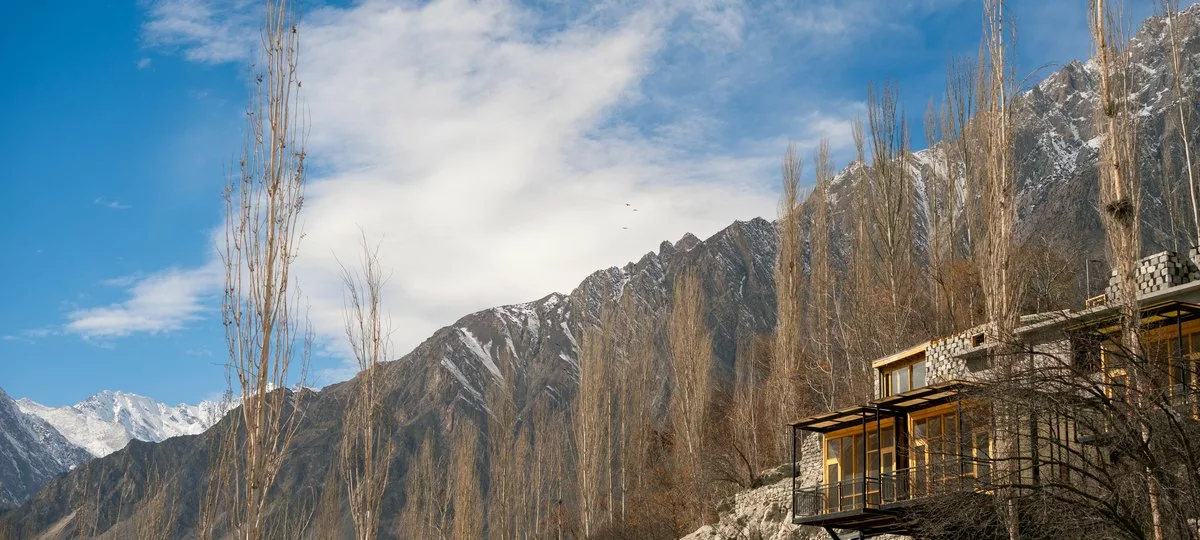
Then it empties. Not gradually, but noticeably, usually within the first couple of weeks of September. The mountains are unchanged. The apricot orchards are still there, Rakaposhi is still visible from the same terrace, and the light in the valley arguably gets better. What changes is everything to do with where you stay, and for a lot of travellers the shoulder season version of the best hotels in Hunza is simply a better experience than the peak season one.
Availability Stops Being the Deciding Factor
In peak season, most people do not really choose where they stay in Hunza. They take what is left.
The best hotels in Hunza fill from the top down, and rooms with a view are booked out first and earliest. Larger rooms and family configurations go next. By the time many travellers start looking, the decision has already been made for them by everyone who booked in April. The result is a lot of people staying somewhere they did not particularly want, at a rate they did not particularly like.
Outside those weeks, the choice comes back. You can ask for the room orientation you actually want rather than accepting whatever is free. You can request a floor, a view, a quieter side of the building. Rates are more reasonable, and there is more room to negotiate on a multi-night stay. And upgrades, which are almost impossible in August, become genuinely possible when a property has capacity to fill.
The Property Itself Runs Differently
The less obvious change is in service, and it is more significant than most people expect.
A hotel operating at full capacity through July and August is doing volume. The kitchen is producing at its limit, housekeeping is turning rooms all day, and the front desk is managing a constant queue. Good properties handle this well, but nobody has spare attention.
At sixty percent occupancy the same team is a different resource. Requests get handled when you make them rather than being added to a list. The restaurant can accommodate you at the time you want rather than the time that is available. Staff have time for actual conversation, which in Hunza is where most of the useful information about the valley comes from — which roads are open, which viewpoints are worth the drive this week, where the light is best in the morning. That knowledge exists in every peak season too. There is just nobody free to share it.
The Trade-Offs Are Real and Worth Checking
Shoulder season is not simply peak season with fewer people, and pretending otherwise sets travellers up for disappointment.
It gets cold, and it gets cold sooner than visitors from the plains expect. From late autumn onwards, room heating stops being a comfort feature and becomes the main thing determining whether your evenings are pleasant. Ask specifically how rooms are heated and whether heating runs through the night, because the answer varies a great deal between properties.
Daylight shortens too. An itinerary built around long summer evenings needs rethinking when the light goes early, and a hotel where you are content to spend a few hours indoors matters more than it would in July.
Some services reduce out of season. A property may run a shorter restaurant menu, close a secondary dining outlet, or scale back activities. This is normal and it is manageable, but it should be confirmed rather than assumed. A short list of questions before booking covers most of it: is the main restaurant running full service, what are the kitchen hours, is heating available in all rooms, and is anything closed for the season.
Access is the last consideration. The higher passes are seasonal, with the Khunjerab Pass closed through the winter months, and road conditions along the Karakoram Highway vary with weather. If a specific excursion is the reason for your trip, check that it is possible for your dates before you commit to them.
Picking the Window That Suits Your Trip
The shoulder season is not one season. It is two, and they are quite different.
Spring arrives in the valley around late March into April, when the blossom comes out and the orchards do the thing Hunza is photographed for. The valley is green, the temperatures are mild, and the crowds have not arrived. Autumn runs from September through October and into early November, when the poplars turn and the valley shifts through yellow and gold against the snow line. Air tends to be at its clearest, which is why photographers favour it.
Both are quieter and cheaper than midsummer. Both give you a hotel that can pay attention to you. The choice between them is mostly about what you want to look at.
Whichever window you pick, booking directly with the property is worth the phone call in the shoulder months, and it is how you get the best hotels in Hunza to work around your plans rather than the other way round. For more information and hotel options, you can also explore gracehospitality.pk. That is when a hotel can be flexible about rates, rooms and arrival timing, and when a conversation about what you actually want from the stay can shape the booking. In August they can only tell you what is left. In October they can ask you what you would like.